
Greenville, SC
Greenville, SC: Seen on social media, July 2026:
“Here's a #greenvillethenandnow pair of images showing two views of the block of Main Street between McBee and Washington looking north 40 years apart. The top photo, from the 1980s, gives a glimpse of a somewhat newly designed Main Street. Mayor Max Heller hired one of America's best urban planners, Lawrence Halprin, to re-conceive our previously 4-lane Main Street into a walkable, 2-lane Main Street with a tree canopy. The top view is just a few years after it was implemented in 1979. The originally planted trees were eventually replaced, but now there is a mature tree canopy. All of the buildings in both photos on the left side of the block are still there (many being from the early 1900s but some from the late 1800s) and today have businesses such as Poppington's Gourmet Popcorn, River Street Sweets , Christ On Main and Sushi Murasaki Greenville . The buildings on the right side of the block have all been replaced since the top photo. #greenvillehistorytours”
Book of the Month in the UK!
The United Kingdom’s Sign Design Society just picked the new Second Edition of Street Design as their Reader’s Corner Book of the Month for June 2026.

SDS explains, “Each month we will showcase a suggested read that relates to our professional areas of interest, be it a seminal publication or something more tangential. We hope the books we select will offer you insights and inspiration.” Street Design is already shipping in the USA and should be available in the UK within the month.
Thank you, SDS!
TO STOP PEDESTRIAN DEATHS NEW YORK CITY MUST CHANGE THE WAY IT BUILDS ITS STREETS
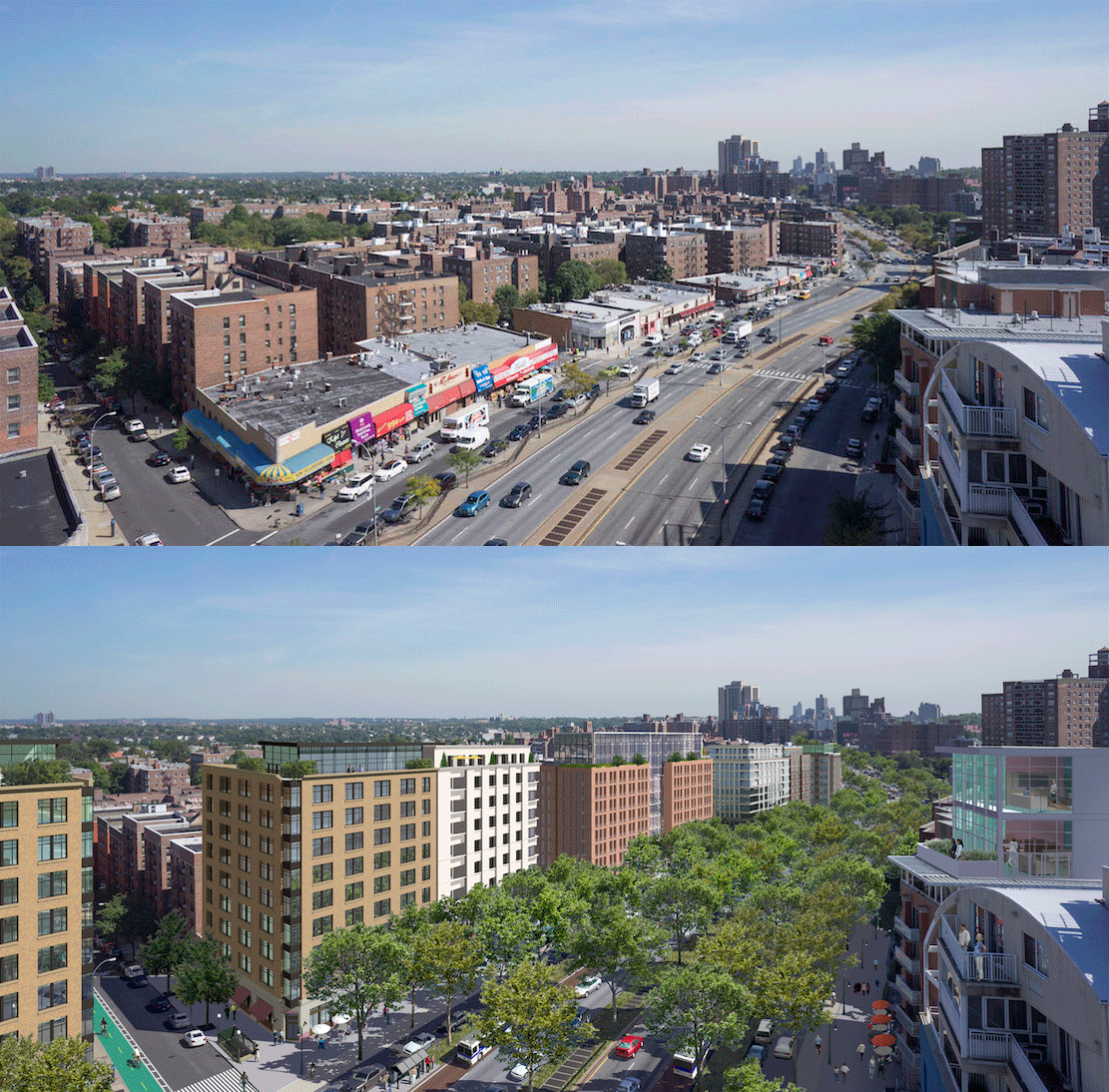
November 13th—Friday the 13th—marked the 13th day in a row that a pedestrian died on a New York City Street, all killed by cars or buses going too fast. They were among the 19 pedestrian deaths in the city last month—basically, one person lost for every business day. These fatalities occurred because despite all the progress New York has made since Mayor de Blasio and his DOT Commissioner Polly Trottenberg signed the Vision Zero Pledge in December 2013 (more on this below), most of our city streets are still seen primarily as transportation corridors for cars and trucks.
Until we prioritize pedestrian safety over traffic flow, we will never get to zero deaths for pedestrians, cyclists, drivers, or their passengers. But the good news is that when we do make streets that are safe for pedestrians, traffic still flows—and it becomes easy to design streets where people can want to get out of their cars and walk, enjoying public life. Which, after all, is what city life is all about. We don’t have to choose between pedestrian plazas in Times Square and suburban-style arterials. We can have our cake and eat it too.
A little history is relevant here: for decades, our city streets have been controlled by the DOT—the Department of Transportation— which employs traffic engineers and transportation planners who have traditionally seen their job as making traffic flow quickly and safely. They use a federal grading system that grades street quality according to the “Level of Service” (LOS)—a measurement of how well traffic moves.
Anything that impeded traffic flow was a problem to be identified and eliminated. Trees became known as Fixed Hazardous Objects (FHOs), because they damage cars that hit them. Standard practice in traffic engineering is therefore to confine trees to a Vegetative Containment Zone kept away from the vehicles.
People are called MHOs—Moving Hazardous Objects. They also slow down and damage cars that hit them, and so they’re kept away from the cars too.
Continue reading at CityLimits.org
Continue reading at Better Cities and Towns (more photos)
A Sreet Is A Terrible Thing To Waste — from New York State Conference of Mayors Summer Bulletin
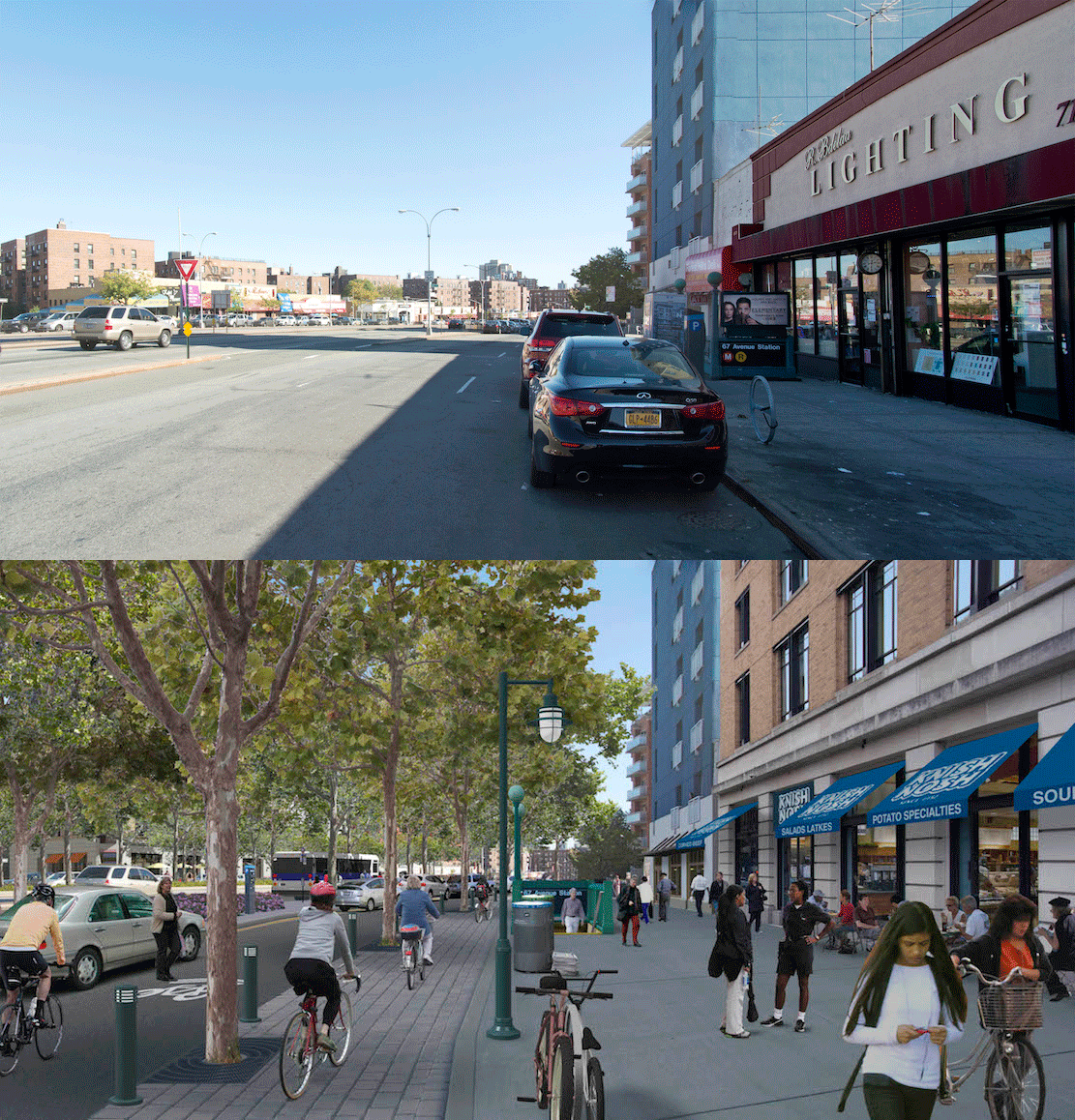
THINK OF A CITY AND WHAT COMES TO MIND?

“Streets and their sidewalks, the main public places of a city, are its most vital organs. Think of a city and what comes to mind? Its streets. If a city’s streets look interesting, the city looks interesting; if they look dull, the city looks dull.” — Jane Jacobs, The Death & Life of Great American Cities
There’s a revolution going on in how we use our streets, but the evolution of the revolution is slow. Complete Streets, Slow Streets, Open Streets—what would Jane say?
Join CNU NYC and John Massengale for a virtual tour of Jane’s Greenwich Village, a history of New City streets, and a discussion of Streets for People and Slow New York.
WHEN: Tuesday, May 4 (Jane’s Birthday), 3 PM (Happy Hour to Follow — BYOB)
REGISTER: MAS Janes Walks
The photo above shows CNU NYC’s 2020 Jane’s Walk on Charles Street in Greenwich Village. Below is Jane Jacobs at the White Horse Tavern. Jane’s house at 555 Hudson Street was on the same block.


WE BUILT THIS CITY TO WALK AND STROLL
“What if we treated historic districts historically, making the cars accommodate the city, rather than the other way around?