The Monderman Rule
For safer and more livable streets, it is better to remove traffic signs and markings than to add them.
Hans Monderman was a Dutch traffic engineer who became the father of modern shared-space streets. He saw that the signs, stripes, and signals his colleagues typically used to improve safety ironically lulled drivers into an unsafe complacency.
Monderman began his career as a conventional engineer, but as he gained experience, he grew skeptical of engineering “improvements” and came to believe that removing curbs, signs, and markings would improve the livability of Dutch cities and towns while making their streets safer.
“The trouble with traffic engineers is that when there’s a problem with a road, they always try to add something,” Monderman said. “To my mind, it’s much better to remove things.”
Related design principles are the K.I.S.S. Rule (page 388 in Street Design, The Secret to Great Cities and Towns), the Coco Chanel Rule (page 400), the “secret of successful retail” that says “the experience of the public realm is what’s important” (page 150), and Mies van der Rohe’s dictum that “Less is more.”
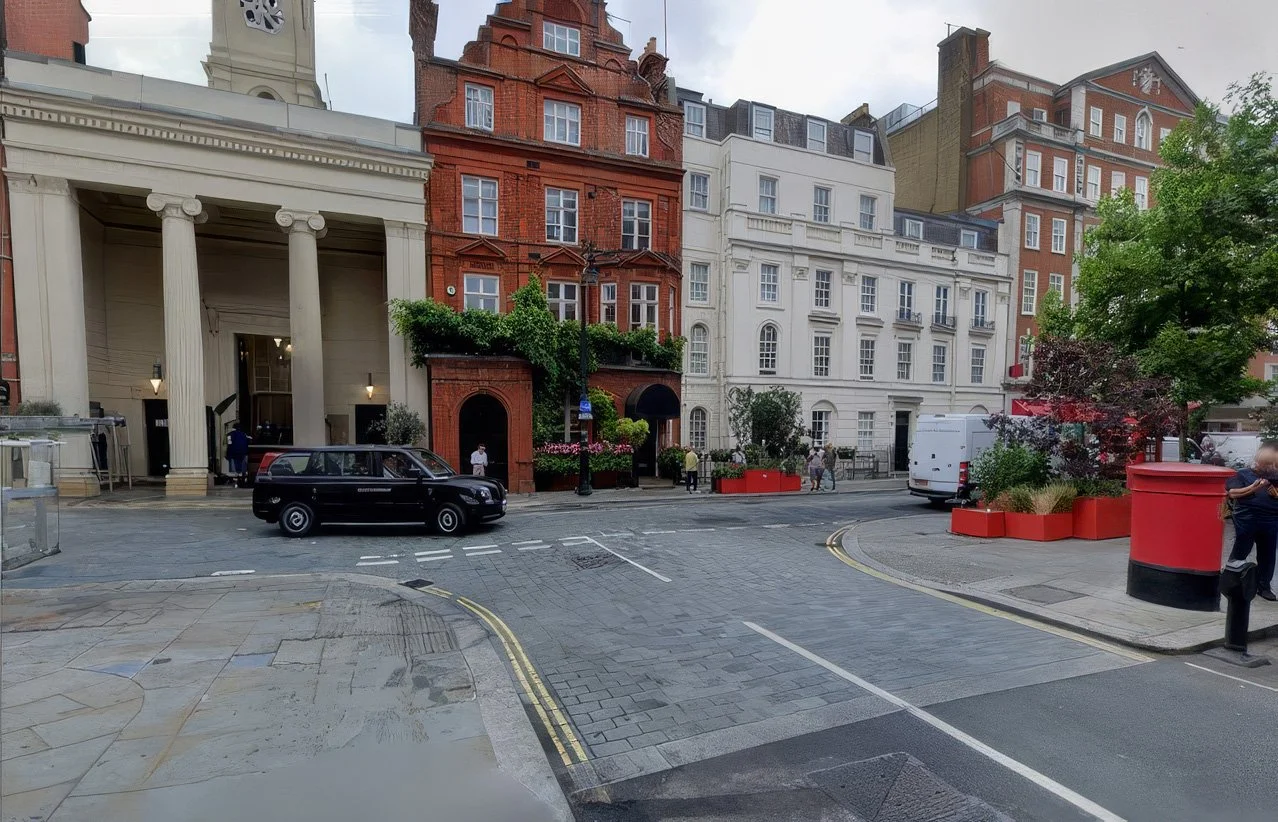
Figure 5.57: Intersection of Green Street and North Audley Street, London, England. Looking east on Green Street. For Americans, what is striking about this photo of a busy “T-junction” in Mayfair is what we don’t see: traffic lights, stop signs, yield signs, reflective plastic sticks, red paint, green paint, supergraphics painted on the street, bumpouts in the street… or any of the engineering detritus American DOTs tell us we must have if we want safe streets. And London’s streets are far safer than American city streets. Compare to Figure 4.153, which shows the historic heart of Greenwich Village, in America’s most walkable city. Courtesy of Google Earth